

Travertine Beige Stone
Travertine Beige is a natural stone with cream-to-beige colour, visible layering and a naturally porous structure. Its bands and small cavities give it a different character from a uniform manufactured surface.
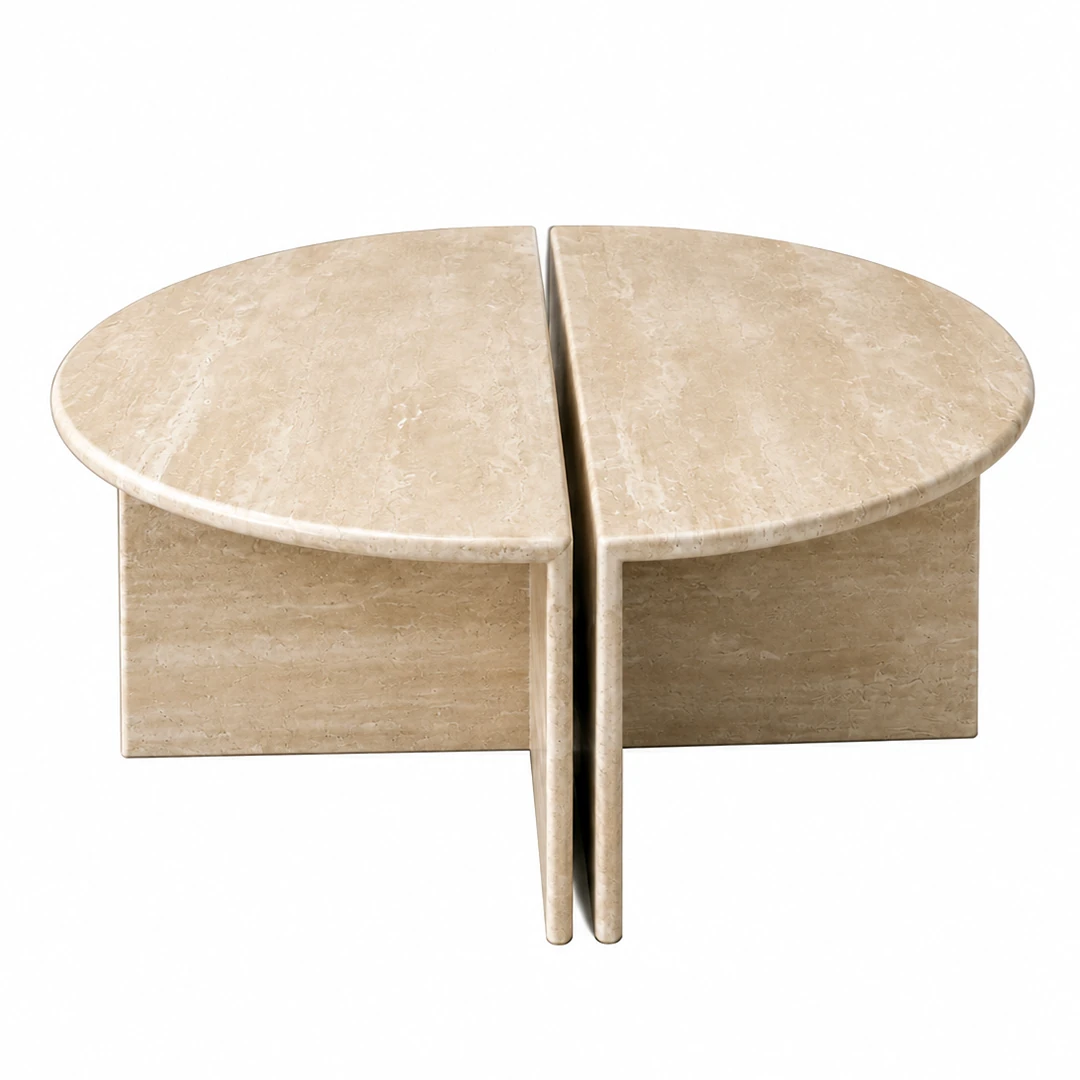
For an interior project, the selection turns on how much colour movement and surface texture you want, and how the finished surface will be used and cleaned. Sheen Interiors has used travertine for wall cladding and side tables, bringing the material into both architectural surfaces and furniture.
Beige Tones, Layering and Natural Variation
Beige is a starting point, not a single colour. The samples below range from grey-beige to warmer cream and golden tones, with fine lines in some and stronger, irregular bands in others.
Fine layering creates a quieter pattern; stronger bands make the direction of the stone more noticeable. Across adjoining pieces, differences in tone and the alignment of those bands affect whether a surface reads as continuous or more varied. A small sample helps establish colour, while the larger pieces reveal the movement that will shape the finished composition.
The direction of the cut also affects travertine’s pattern. Vein-cut stone exposes more linear bands; cross-cut stone reveals a more dispersed, cloud-like pattern. This distinction helps explain why two pieces of travertine can look different even before filling or finishing is considered.
Travertine Samples from Italy, Iran and Turkey
Compare these travertine samples from Italy, Iran and Turkey for their individual colour and layering. Each represents a particular selection, rather than a uniform appearance shared by every stone from that country.

Italian Travertine Beige
Fine horizontal bands mix grey-beige with lighter cream tones, giving this sample a cooler, subdued character.

Iranian Travertine Beige
Cream and tan bands form an irregular, rippled pattern, with stronger contrast in the denser layers.

Turkish Travertine Beige
Warm golden-beige areas alternate with distinct cream bands, with small pits adding surface detail.
Surface Treatment and Intended Use
Filling and finishing describe different aspects of travertine. Filling closes natural surface cavities; honing or polishing changes the surface sheen. These distinctions help you compare a proposed selection.
- Filled or unfilled: filled travertine has a more continuous surface. Unfilled stone retains open cavities and a more pronounced texture, with recesses that need attention during cleaning.
- Honed or polished: honing produces a lower-sheen surface; polishing produces a more reflective one. The choice changes how prominently reflections sit alongside the stone’s colour and bands.
On a feature wall, the pattern and surface relief shape the visual effect. A table adds regular contact with drinks and everyday cleaning, making the treatment and care requirements part of the selection. A floor or wet-area specification also needs an application-specific assessment; appearance alone does not establish slip resistance or suitability.
For a commissioned surface or piece of furniture, marble and natural stonework covers the fabrication and installation scope alongside the material choice.
Everyday Care and Surface Limits
Use a pH-neutral cleaner suitable for natural stone, remove loose grit and blot spills promptly. Avoid acidic cleaners, vinegar and abrasive products. Travertine is sensitive to acids: contact can etch the surface, leaving a dull mark that is different from a stain.
A suitable impregnating sealer can reduce staining, but it does not make travertine stain-proof or prevent acid etching. Follow the care instructions for the selected stone, fill, finish and sealer rather than a universal resealing schedule. On furniture, coasters help limit contact with drinks and other acidic spills.
Projects Using Travertine Beige Stone
Explore projects using Travertine Beige Stone and the role it plays within each interior.

Products Using Travertine Beige Stone




Discuss Your Travertine Project
Considering travertine for a wall, a piece of furniture or another part of your interior? Share your project and the colour or texture you have in mind with Sheen Interiors. A reference image or drawing gives the material consultation a useful starting point for comparing the stone’s character with the surface you want to create.