
Tufa Beige Stone
Beige Stone from Jerusalem with a Textured Character
Tufa Beige Stone comes from Jerusalem and is commonly used externally, with a split-face texture a familiar choice for building façades. It also has a place in interiors, where a textured stone wall can contrast with smoother furniture and fitted surfaces.
Split-face stone has an uneven face rather than a flat polished surface. Its raised areas and recesses make texture part of the appearance, alongside the beige tone. Choosing Tufa therefore involves judging both the colour and the amount of relief you want across the finished surface.

Texture at Façade and Interior Scale
Relief, joints and viewing distance
Natural differences in beige tone and surface relief become part of the wall’s appearance. Compare adjoining pieces together: colour changes can be as noticeable as the joints between them. From a distance, the arrangement of those pieces contributes to the overall rhythm. Closer up, the depth and irregularity of the face become more noticeable. Light from the side casts stronger shadows into the recesses, so compare the texture at the distance from which the wall will normally be seen.
Choosing for the location
For an exterior façade, the stone selection needs to be considered with exposure, fixing arrangements, junctions and access for maintenance. Indoors, consider the relationship with adjacent smooth surfaces and whether the relief projects into an area people will regularly touch. Common exterior use does not settle the specification for every building.
Carved Detail Within a Rough Stone Surface
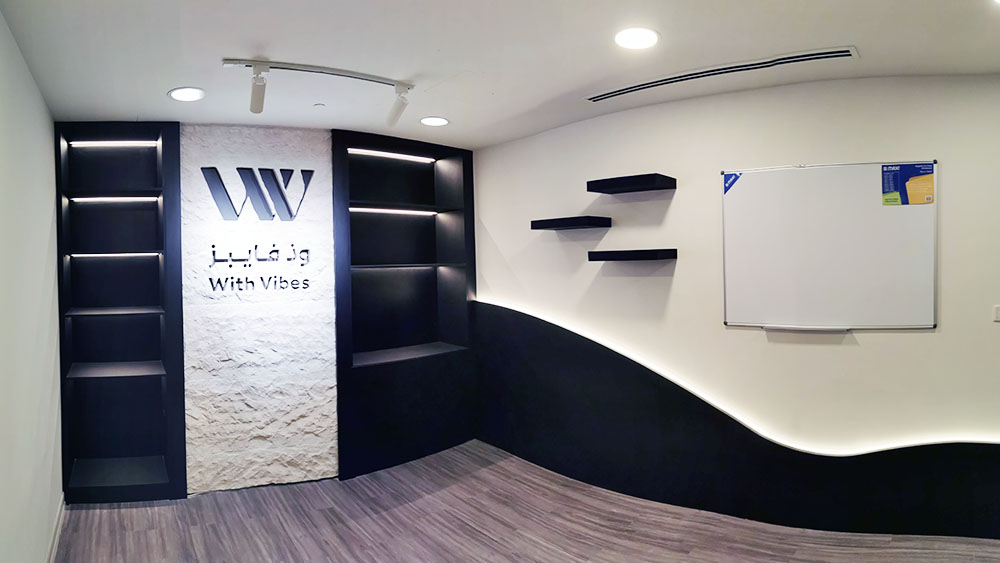
Tufa Beige has been used by Sheen for CNC-carved lettering on an unpolished, split-face interior wall. The carved detail and the rough field serve different visual purposes: one defines the motif, while the other gives the surrounding surface its texture.
When selecting stone for lettering or a decorative motif, consider how the detail will read against the relief and from the normal viewing distance. Pattern scale and placement belong with the surface choice. The commissioned cutting, carving and installation scope is covered by marble and natural stonework.
Choosing and Caring for a Textured Finish
The face you will live with
Split-face texture is a common choice for Tufa, but texture and intended use need to be considered together. A rough wall face has different requirements from a horizontal surface that will be touched or wiped frequently. Compare the proposed stone and treatment for the application rather than expecting every finish to behave in the same way.
Cleaning recesses and adjoining work
Loose dust can settle in the recesses of a textured face. Remove it gently with a soft brush suited to the surface, then use a natural-stone cleaner as directed. Avoid acidic or abrasive cleaning products, and test a proposed treatment in an inconspicuous area before applying it widely.
For external cleaning or persistent marks, establish a method appropriate to the stone, joints and any treatment. Do not assume a pressure-washing method or a fixed sealing schedule suits every installation.
Projects Using Tufa Beige Stone
Explore completed projects using Tufa Beige Stone and the role of the stone within each setting.
Discuss Your Tufa Beige Stone Surface
Tell Sheen Interiors whether you are considering a façade, an interior feature or another use, and the texture you want to achieve. The location, viewing distance and any carved detail provide a useful starting point for selecting the stone and its treatment.