

Natural Walnut Veneer
Natural Walnut Veneer: a real wood surface
Natural Walnut Veneer is a layer of real Walnut wood applied over a supporting material. The visible face carries the wood’s natural grain and colour; the construction beneath it is separate from that surface. A veneered piece is therefore different from a piece made from solid Walnut throughout.
Brown tones and markings vary between veneer leaves, the individual sheets used to form a face. Cut, arrangement and finish shape how that variation reads across the finished surface.
Crown cut or quarter cut?
Crown cut

Crown cut commonly reveals broad, arching grain, often described as a cathedral figure. It gives a visible face a more pronounced pattern, with changes in direction and width across the wood.
Quarter cut
Quarter cut generally gives a more linear grain direction. It can suit a design where the eye should follow the length or height of a surface, while retaining natural variation rather than perfectly uniform stripes.
Matching the grain across adjoining faces
Book matching
Book matching places neighbouring leaves in a mirrored relationship, like facing pages. It creates a balanced composition around the meeting line. Reversing the grain orientation can also make adjacent leaves reflect light differently, so a mirrored pattern need not appear as one uniform shade.
Slip matching
Slip matching repeats successive leaves in the same orientation. The grain progresses across the face without the mirrored reversal of a book match. A natural sweep or lean in the grain can become part of that repeating rhythm.
Patterned arrangements
Patterned arrangements use the placement and direction of veneer to form a composition developed for the design. They can draw the eye towards a focal area or change the rhythm across a surface, rather than following one repeated leaf arrangement.
Across adjoining doors, drawer fronts or panels, decide where the grain composition should continue and where it should change. The divisions remain part of the design: choosing a matching method for one face does not by itself establish continuity across the whole piece.
The backing board and exposed edges
The supporting board
MDF or plywood can support the Walnut face, depending on the application. The board provides the body of the panel; its specification needs to suit the panel size, support and fixings. The Walnut surface alone does not establish those properties.
Edges and returns
A front face and its visible edge are separate details. Consider the edge’s colour, its junction with the face and what will be seen when a door opens or a piece is viewed from the side. The intended edge treatment should be considered with the complete construction.
Stain colour and sheen are separate choices
Staining to the required shade
Natural Walnut Veneer can be stained in different shades according to the design requirements. The wood’s underlying colour and grain contribute to the result, so a reference colour is a direction to assess on the selected veneer rather than a guarantee of an identical match.
Matte, satin or gloss
Sheen describes how the finished surface reflects light, separately from its colour. Matte gives a subdued reflection, satin a softer lustre, and gloss a more pronounced reflection. Compare the intended shade and sheen together; the same colour can read differently as the reflection changes.
Choosing veneer for furniture and interior faces
Cabinet fronts and interior panels
For a cabinet front, regular handling and cleaning influence the finish and edge choices. An interior panel may receive less direct contact, but its position still matters: assess exposure to moisture, heat and daylight as part of selecting the complete panel.
Furniture and working surfaces
A surface used for serving, writing or everyday objects needs to be selected for that contact, not just its colour. Consider the finish, supporting construction and protection from hot or wet items together. Explore Custom Woodwork & Joinery when you are ready to develop the furniture or fitted-work commission.
Caring for the finished Walnut surface
Daily care
Dust with a soft cloth, remove spills promptly and protect the surface from hot objects and standing moisture. Use cleaning products suited to the actual finish; a real wood surface does not automatically require oiling or polishing.
Placement and refinishing
Prolonged light exposure can change wood and finish colour. Limit direct sunlight and avoid concentrated heat or persistent damp. Veneer is a surface layer, so abrasive restoration can reach the material beneath it. Seek appropriate advice before sanding or refinishing rather than treating it as a thick solid-wood surface.
Products using Natural Walnut Veneer
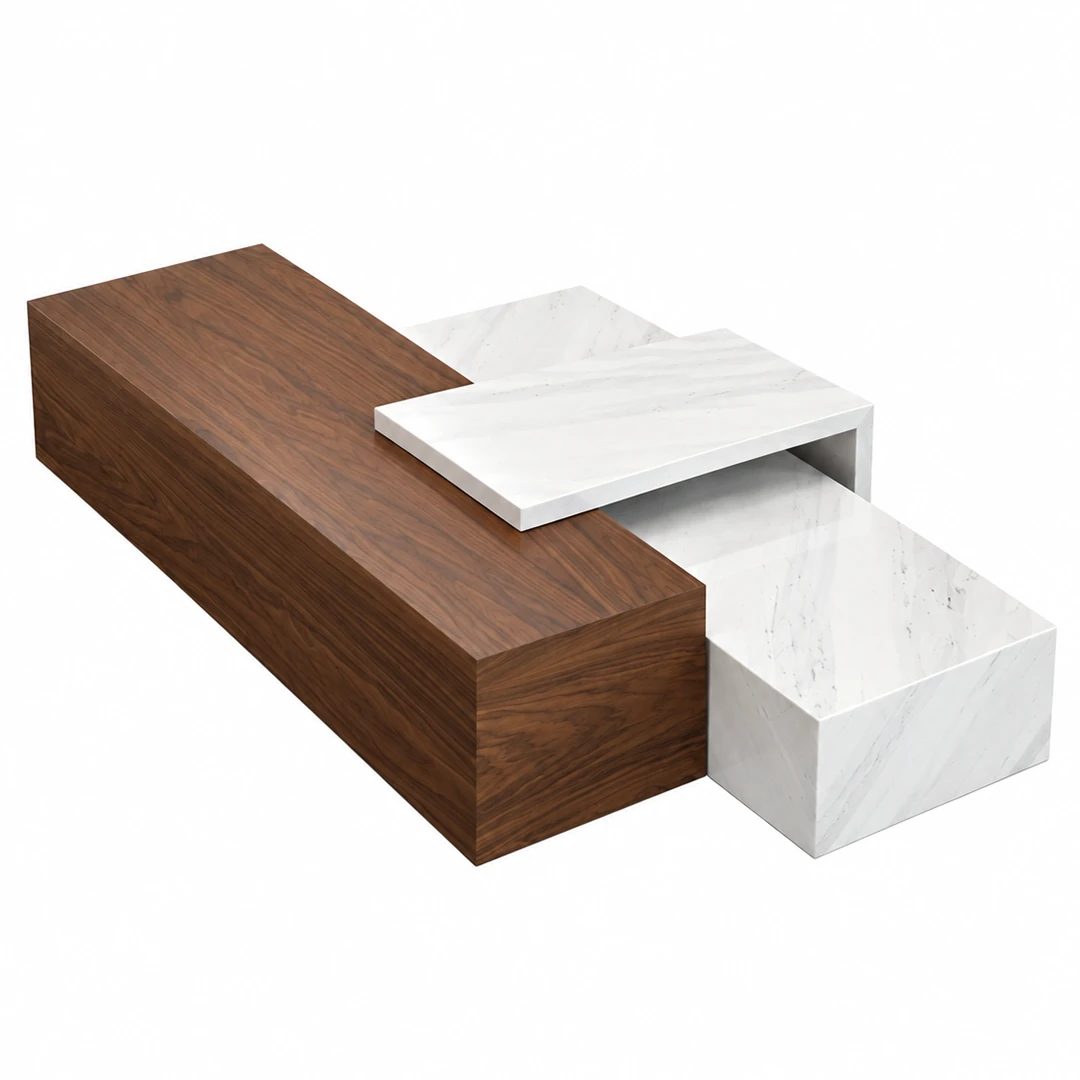
Explore products using Natural Walnut Veneer, with the design and material specification on each product page.


Discuss your Walnut veneer selection
Tell us where you plan to use Natural Walnut Veneer and the surface character you want to achieve. Discuss the material selection for your furniture or interior project in Qatar.